What is the Folding
Screen Illustrating
the Summer War of Osaka?

The Greatest Masterpiece of
Warring States Period Battle Screens!
SANADA Yukimura
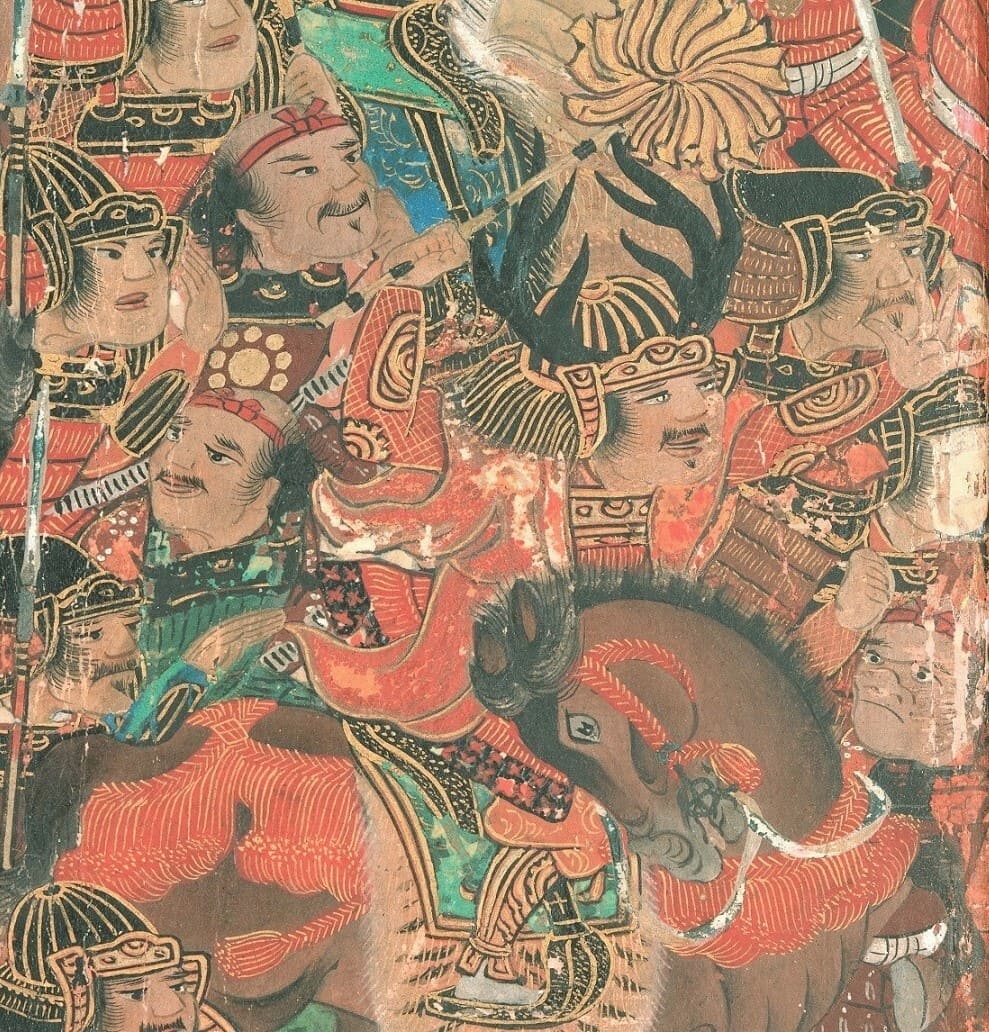
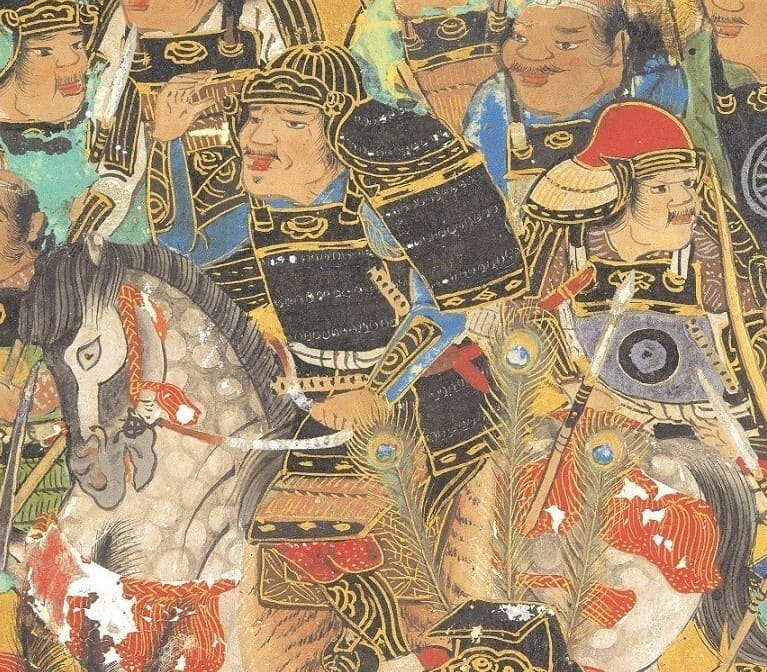
DATE Masamune Of illustrative historical materials depicting Toyotomi's Osaka Castle, the most famous is the Folding Screen Illustrating the Summer War of Osaka (Important Cultural Property). This work portrays the decisive battle on May 7, 1615, and is considered to be the greatest masterpiece of folding screens depicting battles of the Warring States period. It depicts not only the battle between the armies of Toyotomi and Tokugawa, but also details the suffering of defeated soldiers and townspeople fleeing Osaka.
This work is said to have been commissioned by Kuroda Nagamasa, who participated in the battle, and remained in the possession of the Kuroda family, who were feudal lords of Fukuoka, throughout the Edo period. In addition to Kuroda Nagamasa, 21 generals, including Sanada Yukimura, Tokugawa Ieyasu, and Date Masamune, can be seen within the painting, with the total number of people depicted on the screen to 7,103.
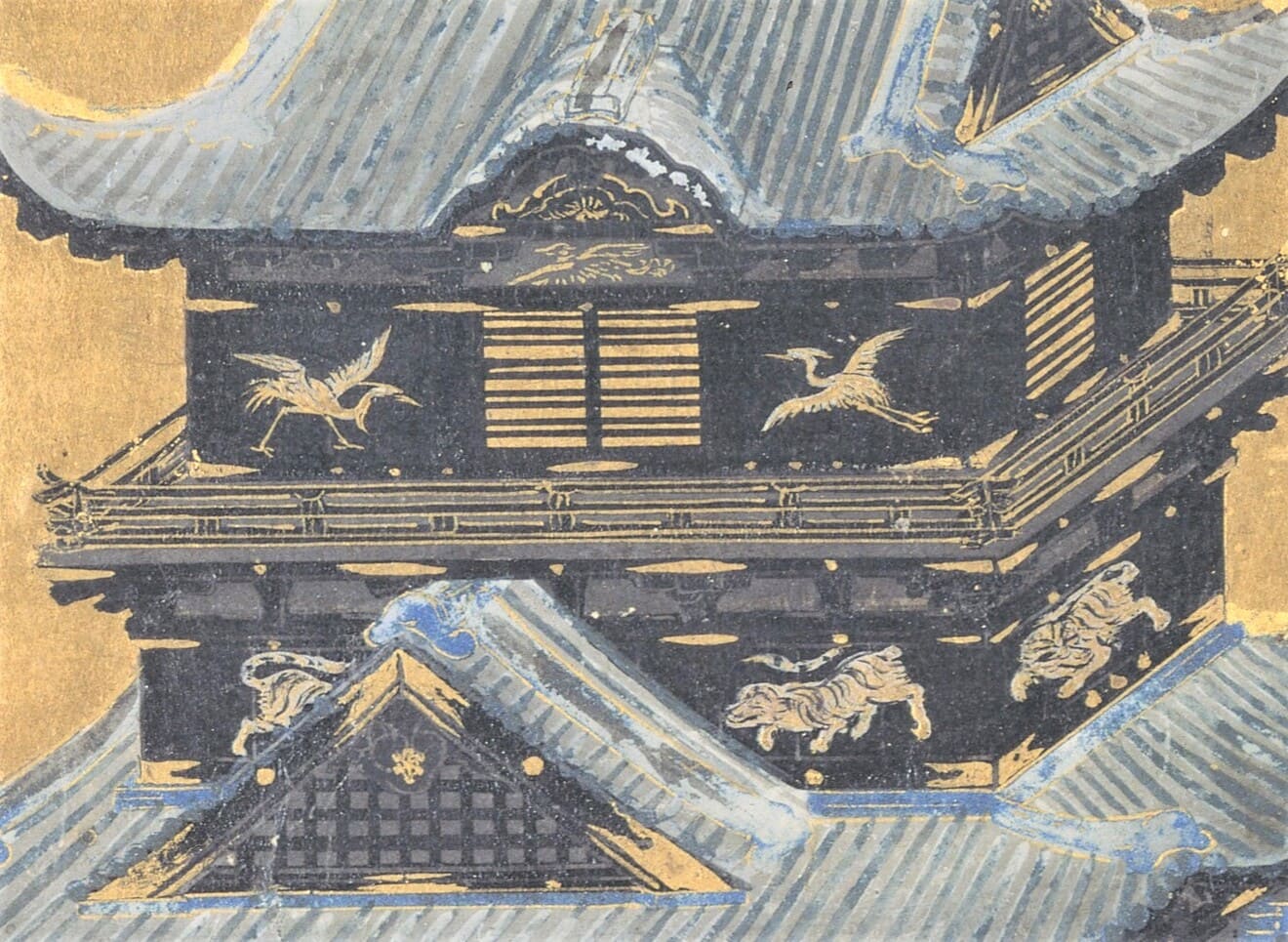
Tigers and herons painted on the castle tower
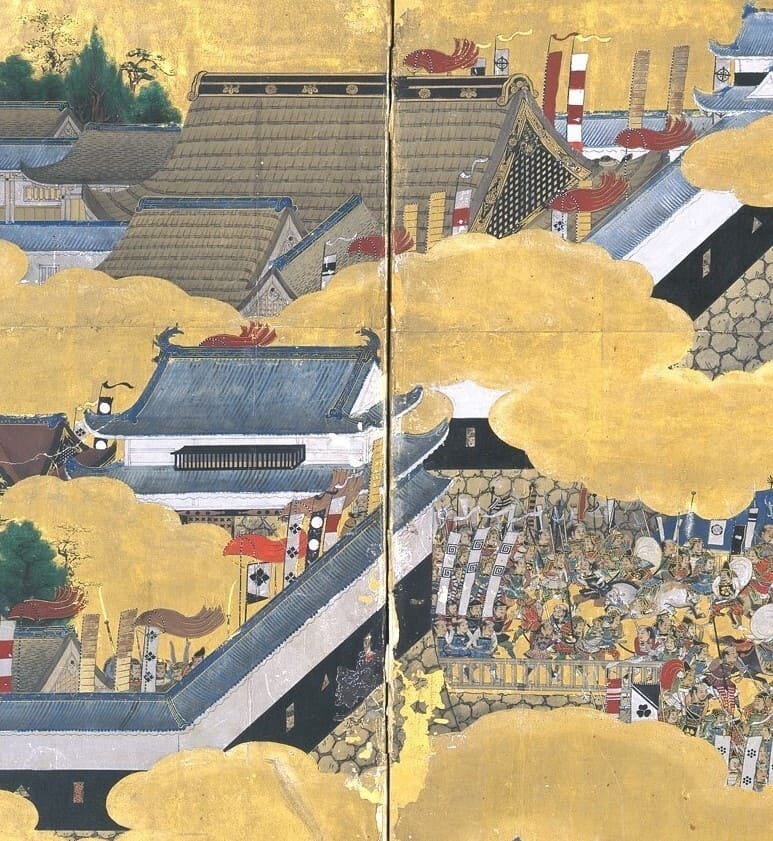
Sakuramon Gate (the turret gate in the foreground)
and Senjojiki Palace (the building in the background)
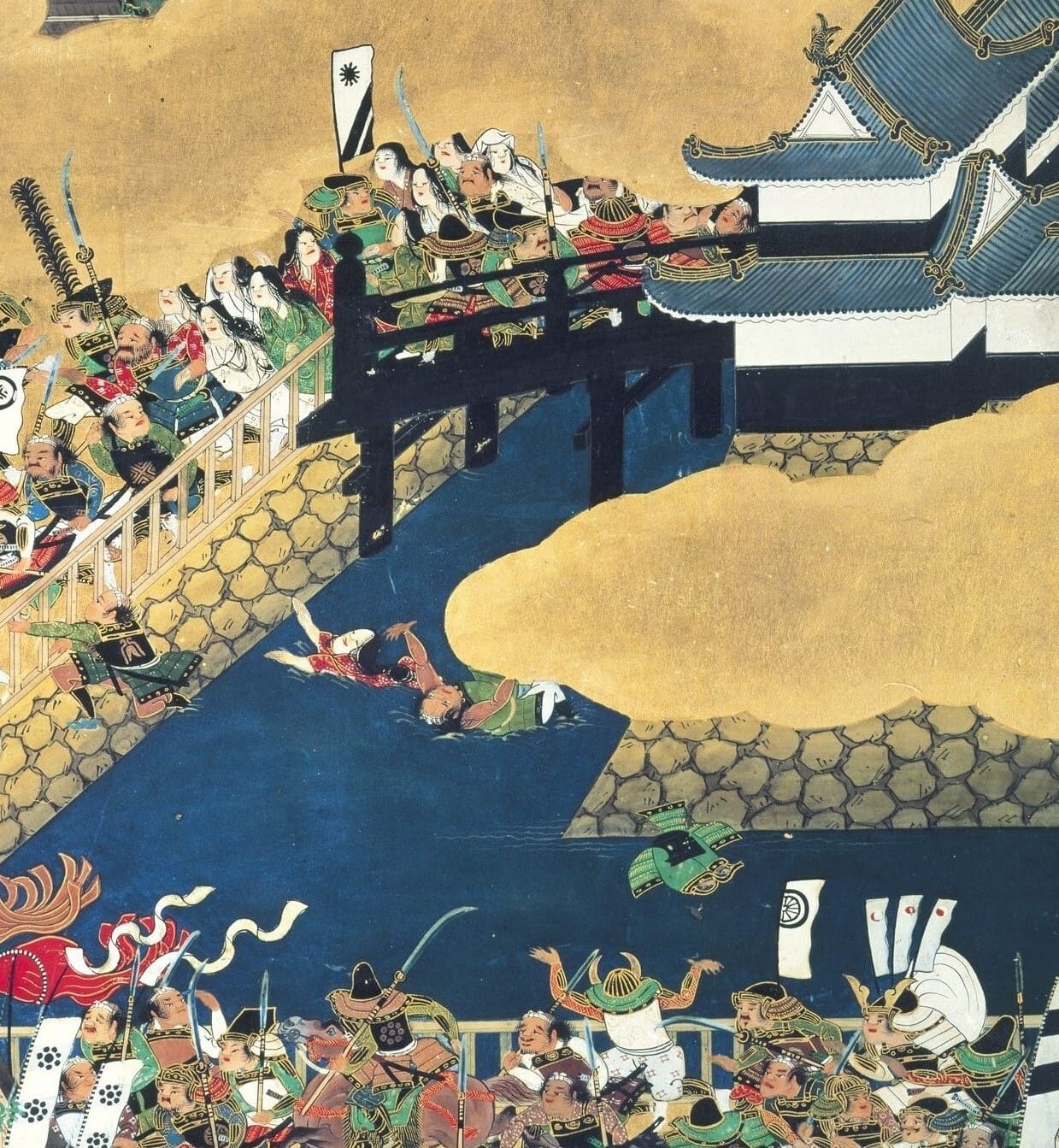
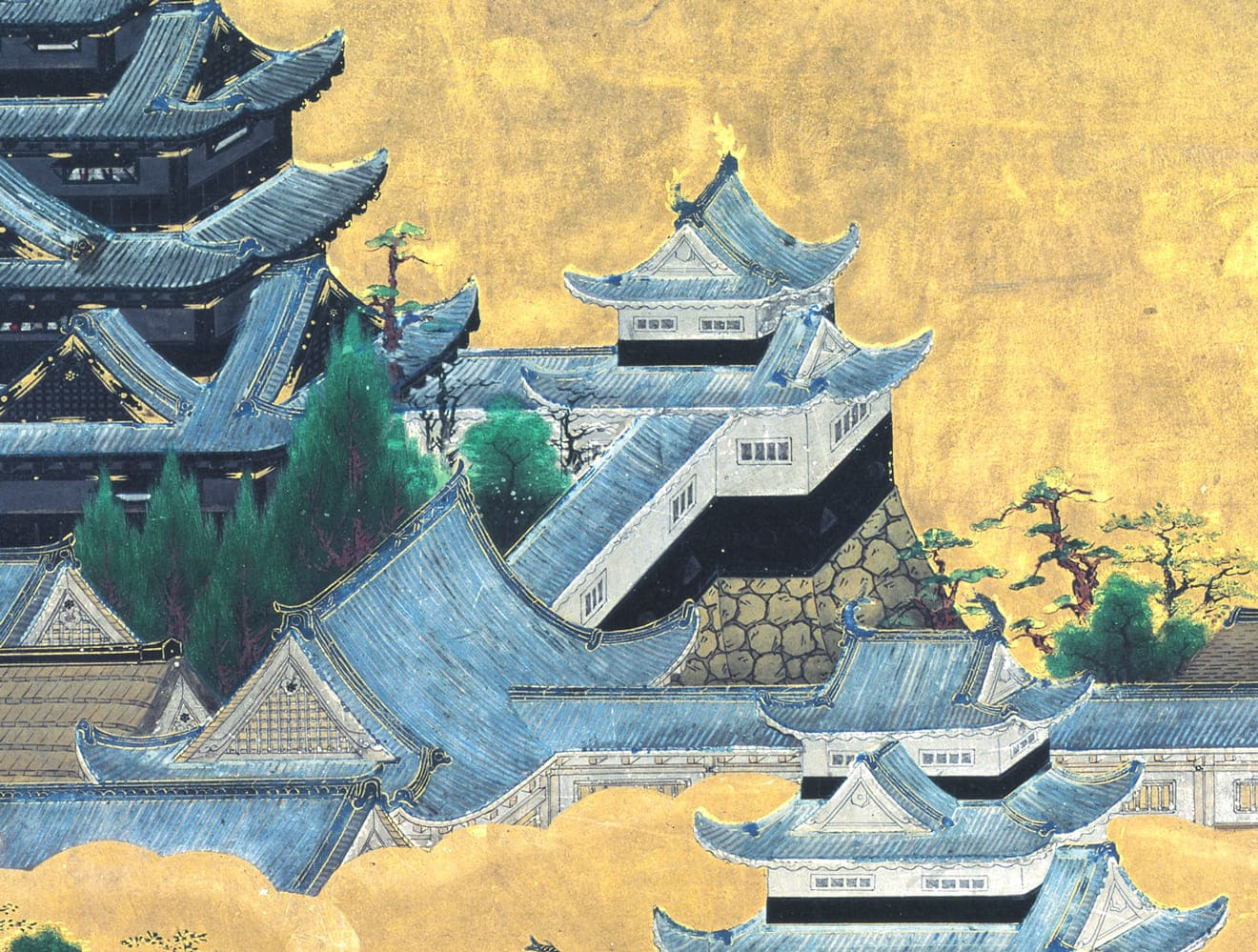
Gokurakubashi Bridge above the hommaru (inner bailey) moat The depiction of Osaka Castle is also detailed, with tigers and herons painted in gold on the outer walls of the castle tower. In addition to the castle tower rising over the northeastern part of the hommaru (inner bailey), the locations of the Sakuramon Gate and Senjojiki Palace in the south, as well as Gokurakubashi Bridge in the north, are also accurate.
Stone walls on display
at the Toyotomi Stone Wall Museum
The stone walls currently on display in the Toyotomi Stone Wall Museum at Osaka Castle are depicted just to the right of the castle tower, along with the turret that once stood atop them.